DAILY OBSERVATION GUIDE
How to check wheels and stance on a 1/64 die-cast model
A repeatable, non-invasive way to observe four-wheel contact, body lean, axle wobble, wheel-to-fender clearance and rolling behavior on a 1/64 miniature.
QUICK ANSWER
Place the miniature on a clean, hard, level surface and look from the front, both sides and rear to see whether all four tires make contact. Compare left and right ride height and wheel-to-fender gaps from the same low camera position. For rolling, use one very gentle push along a short lane far from any edge. If a wheel lifts, the car pulls sharply or something catches, do not bend the axle or add lubricant. Photograph the untouched state first, then separate possible surface distortion, intended design and assembly variation before reaching a conclusion.
- Use a clean, hard, level surface before judging the model
- Check four-wheel contact and body lean from matching low viewpoints
- Compare wheel-to-fender gaps at the same camera height and distance
- Limit rolling checks to a short lane and one very gentle push
- Record first; do not rush into bending, disassembly or lubrication
The goal is to separate and record conditions, not to repair immediately
A small model can appear uneven because of a slightly warped table, tire moulding, axle play, or the way the body and base were assembled. Begin by recording what is visible under controlled conditions instead of labelling it a defect.
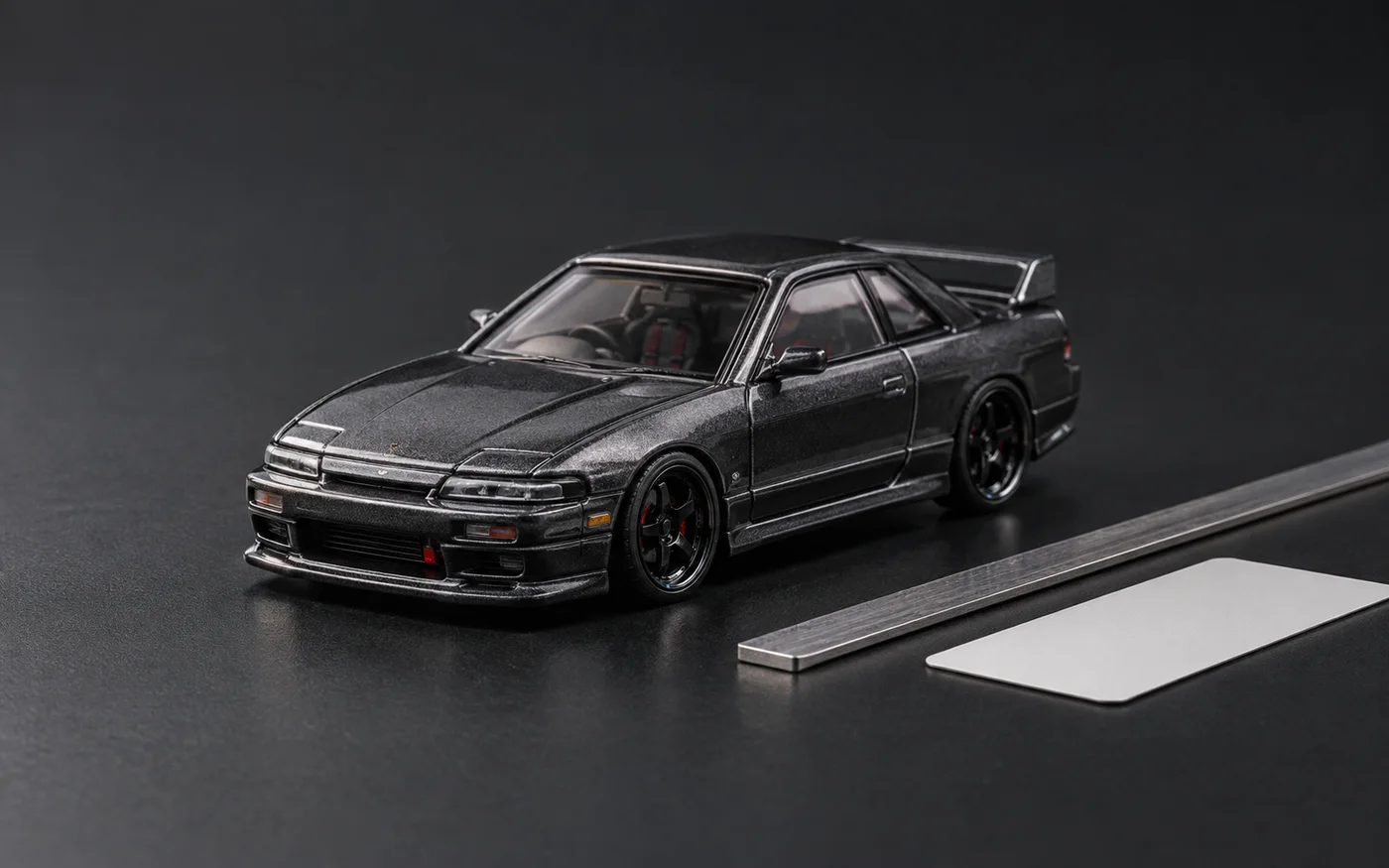
You need only a clean hard surface, a blank white or gray card, a phone and, if necessary, paper to soften the light. A straight card edge can provide a visual reference, but it should not be pressed against the model.
1. Verify the surface before judging the car
Soft cloth and padded photo backdrops let tires sink and make contact difficult to judge. Use a hard flat board or shelf, then rotate the model 180 degrees in the same spot. If the apparent lean remains aligned with the table rather than the car, the surface may be influencing the result.
Clear display bases can also carry slight distortion or a small particle. Compare the model both on and off the base and remove dust or grit before continuing.
2. View four-wheel contact and ride height from low angles
Lower your viewpoint near the wheel centers and observe from the front, each side and the rear. Check whether all four tires touch the surface, whether one corner lifts, and whether the body appears level from left to right. There is no need to press the car down.
Fix the phone in place and rotate only the model for a second photograph. This helps separate camera tilt from body lean. A blank card with a straight horizontal edge can make the comparison more repeatable.

3. Separate wheel-to-fender clearance from apparent axle wobble
From a direct side view, compare the gap above the front and rear tires. Photograph both sides from the same distance and height, and look for constant contact between a tire and the body or base. If the design uses deliberate camber or a low stance, symmetry is a useful clue.
To observe wobble, move the car only a few centimeters on the flat surface rather than lifting it and spinning the wheels quickly. Repeating vertical movement may involve a tire, axle or wheel mounting, but appearance alone cannot identify which component is responsible.
4. Use one gentle rolling check on a short lane
Create a clean straight lane about 30–50 cm long, well away from the edge of the table. Move the model forward with one very light push and observe whether it tracks straight, stops immediately or pulls consistently to one side. This is not a speed or distance test.
If it catches or veers strongly, do not keep pushing it or roll it from a height. End the test before a fall, mirror or spoiler damage, or paint contact occurs, and preserve the untreated condition in photographs.
NOTE — Lubrication, solvents, axle bending and disassembly are separate and potentially irreversible interventions. Avoid them when materials, construction and warranty conditions are unknown.
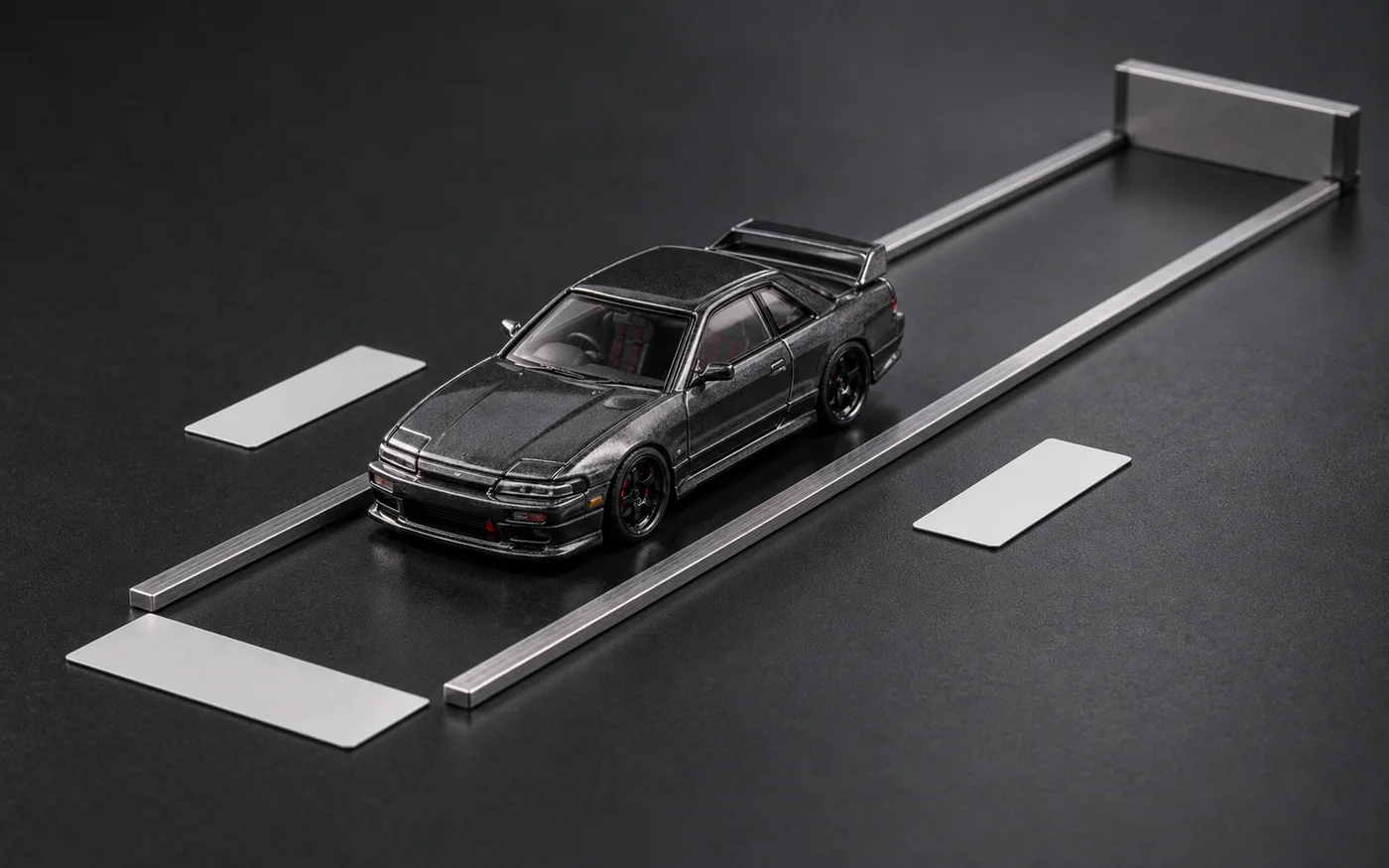
5. Make the observation repeatable with four photographs and a note
The value of the record is not an instant verdict. It creates a consistent basis for comparing another example or the same model later. Untreated photographs and precise observations can also make a retailer or manufacturer enquiry easier to explain.
- Low front view: left-to-right ride height and front-wheel direction
- Direct side view of each side: front and rear fender clearance
- Low rear view: rear-tire contact and body lean
- Note: surface used, result after rotation, rolling direction, and any contact or sound
- Add the purchase or opening date when known so initial state and later change are not confused
Frequently asked questions
One tire appears slightly raised. Is the model definitely defective?
Not necessarily. The surface, tire moulding, axle play and assembly can all affect the appearance. Repeat the check on a hard surface, rotate the model and record matching low views before deciding.
Should I add oil when the wheels feel tight?
Not while the materials and construction are unknown. Oil can collect dust and migrate toward plastic or paint. Preserve the untreated state first and follow manufacturer guidance if available.
Can I straighten an axle by hand?
Bending or disassembly is an irreversible intervention that can cause damage or affect warranty support. Keep the initial check observational and contact the retailer or manufacturer when appropriate.
Can I check tire contact on a soft photo cloth?
Soft cloth is useful as a backdrop but can let tires sink, so it is poor for contact checks. Use a clean, hard surface and treat the cloth setup as a separate display condition.
About this note
This practical note is built around a repeatable observation or collection workflow and does not depend on a current product announcement. Any future addition involving release dates, specifications or news will identify its supporting source.
The procedure is presented as practical guidance, not as a universal product specification. We do not invent hands-on impressions of products we have not examined.