DISPLAY & PRESERVATION
How to Protect Diecast Models from Light: Sun, UV and Display Time
A practical guide to placement, lighting, display time and rotation for reducing light and heat exposure to models, plastics, tires and packaging.
QUICK ANSWER
The most effective steps are to keep models away from windows and direct sun, then switch display lighting on only when it is needed. UV control helps, but it does not replace reducing visible-light intensity and exposure time. Because a model and its package combine paint, printing, plastic, rubber and paper, plan around the most light-sensitive component.
- Do not use a sunny windowsill as a permanent display.
- Reduce visible-light intensity and display time as well as UV.
- Keep enough distance from lamps to avoid trapped heat.
- Plan for the most light-sensitive material, including packaging.
- Rotate displays so the same model does not receive all the exposure.
Light-related change cannot simply be reversed
The Canadian Conservation Institute (CCI) describes visible light as a cause of color fading, ultraviolet radiation as a cause of yellowing, chalking and weakening, and infrared radiation as a source of surface heating. These changes are not like loose dust that can later be removed.[1]
A diecast model is not only metal. Paint, printed decoration, glazing, interior plastics, tires, adhesives, card and printed packaging can all respond differently. Since household collectors rarely know every material formulation, a cautious display should assume that one component may be more sensitive than the rest.
First move: leave the windowsill
Direct sun combines intense visible light, ultraviolet radiation and heat. CCI lists avoiding direct sunlight and intense close spotlights as a basic preservation measure.[1]
There is no universal safe distance from a window. Direction, season, curtains and reflections all change the result. Check the shelf in both the morning and afternoon on a clear day and choose a position where a sharp sun patch or window-frame shadow never reaches the collection.
- Do not use a windowsill or bay window for permanent display.
- Check whether direct sun moves across the shelf during the day.
- Close curtains or blinds when the room is not in use.
- Make sure sunlight is not turning a closed case into a warm enclosure.
UV control helps, but it is not the whole answer
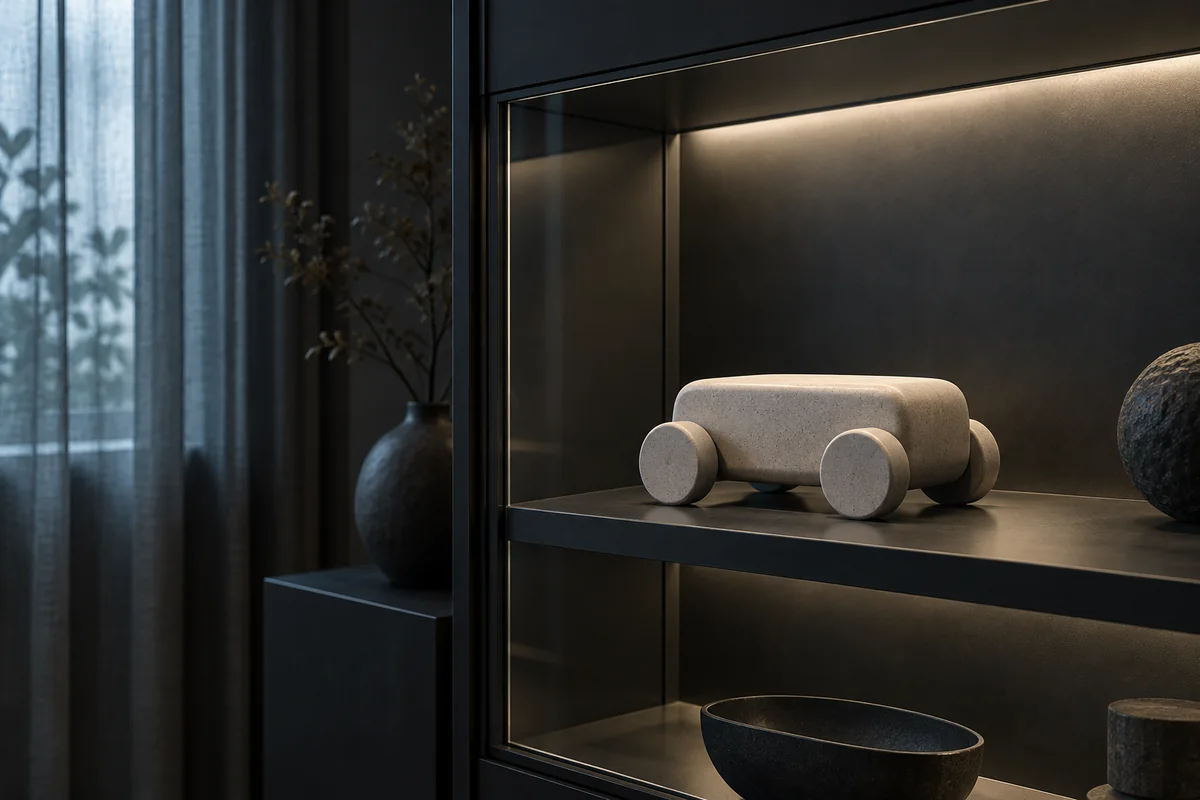
UV is not needed for viewing, so reducing it is worthwhile. CCI also explains that visible light itself remains important for light-sensitive colors; a UV filter alone does not prevent all fading.[1][2]
Even with UV-filtering glazing or window film, do not plan on continuous bright exposure. Combine filtration with indirect placement, lower output and shorter operating time.
Think in terms of intensity multiplied by time
Conservation practice treats total light exposure as illuminance multiplied by time. A home display does not need museum-level calculations to use the principle: at the same brightness, halving operating time also halves the accumulated light exposure.[1]
Avoid using case lights as permanent night lights. A timer, smart plug or occupancy sensor can reduce accidental all-day operation. Keep lamps far enough away that heat does not build up around the model or inside the case.
Use rotation to distribute exposure
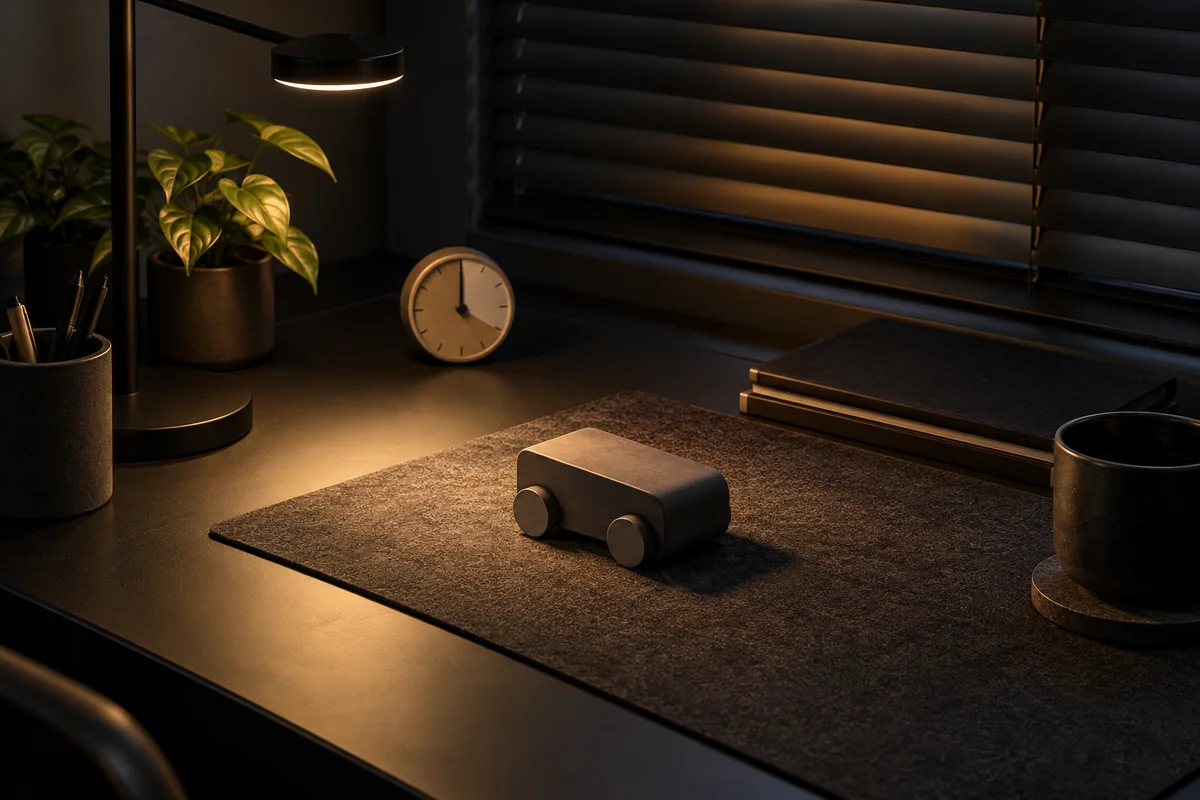
Display a smaller group and keep the rest in dark drawers or boxes. Monthly, seasonal or theme-based rotation reduces the exposure received by any one model while making the collection feel fresh.
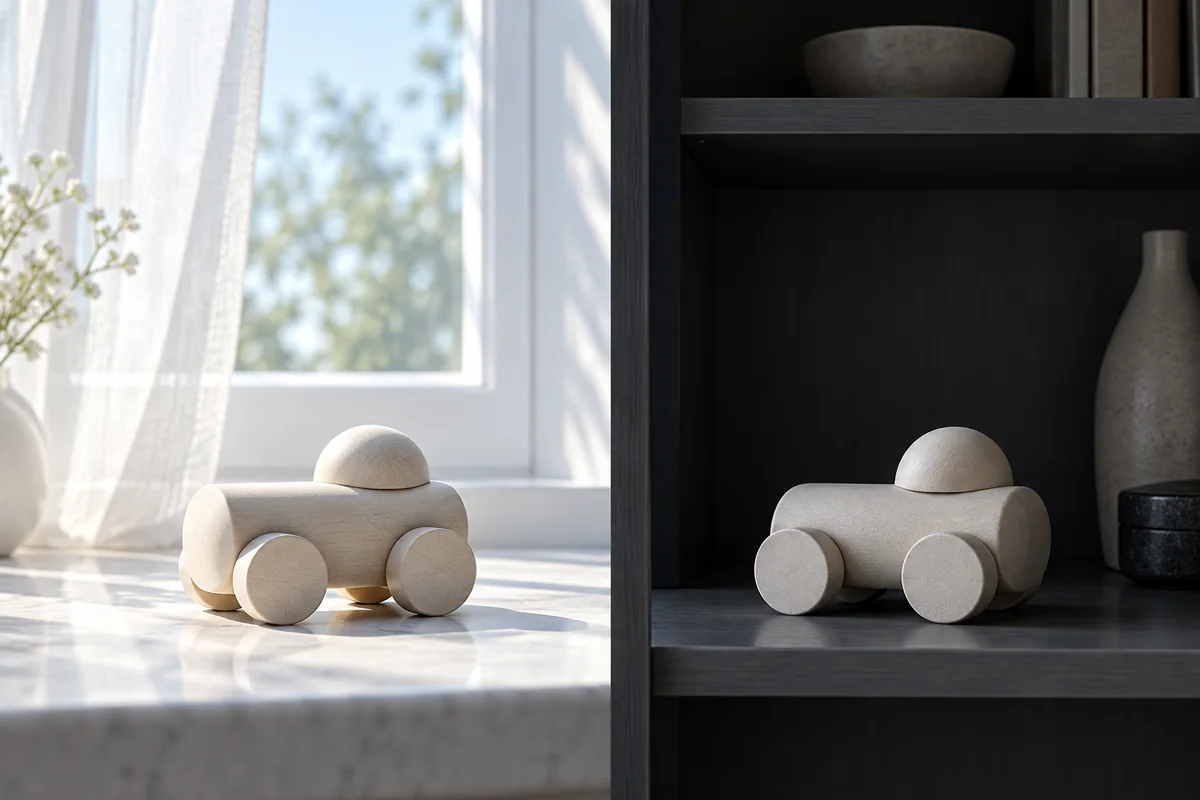
If packaging is displayed too, remember that printed card may change before the metal body. Avoid lighting one face continuously and keep consistent photographs so color shifts or yellowing are easier to notice.
A five-minute home check
- On a bright day, confirm that direct sun does not reach the shelf.
- Check for warmth around the light and at the top of a closed case.
- Review whether lights remain on when no one is viewing the display.
- Compare the same face of the model and box with an earlier record photo.
- Move a model to dark storage if a change is suspected, then isolate possible causes.
NOTE — Museum illuminance limits are selected by specialists according to material sensitivity, significance and exhibition goals. This guide does not guarantee a safe lux level or service life for a particular model.
Frequently asked questions
Can LED display lighting still fade a model?
Yes, it can. LEDs still emit visible light, so cumulative exposure is not zero for light-sensitive colors and materials. Even with a low-UV source, keep brightness and operating time to what you actually need.
Is a UV-filtering case safe beside a window?
It is not a good permanent location. Filtering UV does not remove intense visible light or solar heating. Use the case as a secondary measure after moving the display away from direct sun.
Is a boxed model completely protected?
A box greatly reduces light exposure, but temperature, humidity, pollutants and material contact still matter. Avoid hot and damp storage locations.
Sources and editorial policy
Reference links are listed below with the date used for this article. Linked pages may later change or move.
- Canadian Conservation Institute — Agent of Deterioration: Light, Ultraviolet and Infrared (checked: 2026.10.15)
- Canadian Conservation Institute — Ultraviolet Filters – CCI Notes 2/1 (checked: 2026.10.15)
Factual claims are checked against the sources listed above. We do not invent hands-on impressions of products we do not own. This independent publication is not affiliated with any manufacturer.