OBSERVATION METHOD
How to Look at a Diecast Car: Seven Details Worth Checking
A repeatable way to inspect silhouette, paint, wheels, movement, scale, underside and packaging before forming an opinion.
QUICK ANSWER
Start with the model’s purpose and overall silhouette. Then move closer: paint boundaries, wheels, moving parts, scale, underside and package information. A consistent order makes comparisons fairer and reveals what the designer prioritized.
- Judge a model against its intended purpose.
- Look at stance and proportion before tiny decoration.
- Separate paint quality from design preference.
- Check wheels and movement on a flat surface.
- Record observations before memory turns them into a vague impression.
1. Identify the product’s purpose
A fast track toy, a child-friendly working vehicle and a collector model solve different problems. Before judging accuracy, ask what the model is trying to do and at what price.
2. Read the silhouette and stance
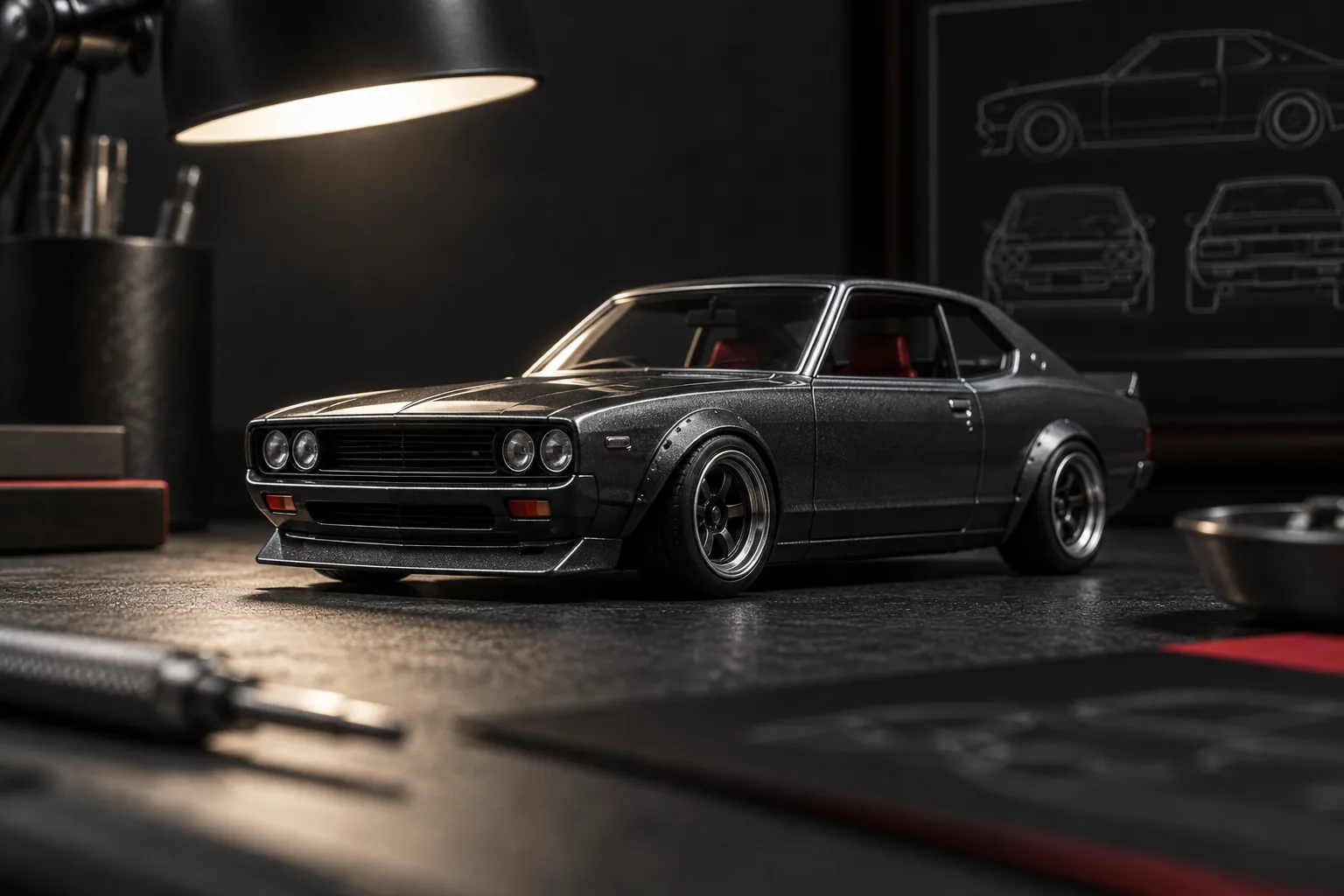
Set the model at eye level and look at the roofline, overhangs, wheel position and empty space around the tires. The overall stance usually communicates the vehicle more strongly than a small printed badge.
Compare front three-quarter, side and rear three-quarter views. One dramatic angle can hide a proportion that feels unusual elsewhere.
3–4. Separate paint, printing, wheels and tires
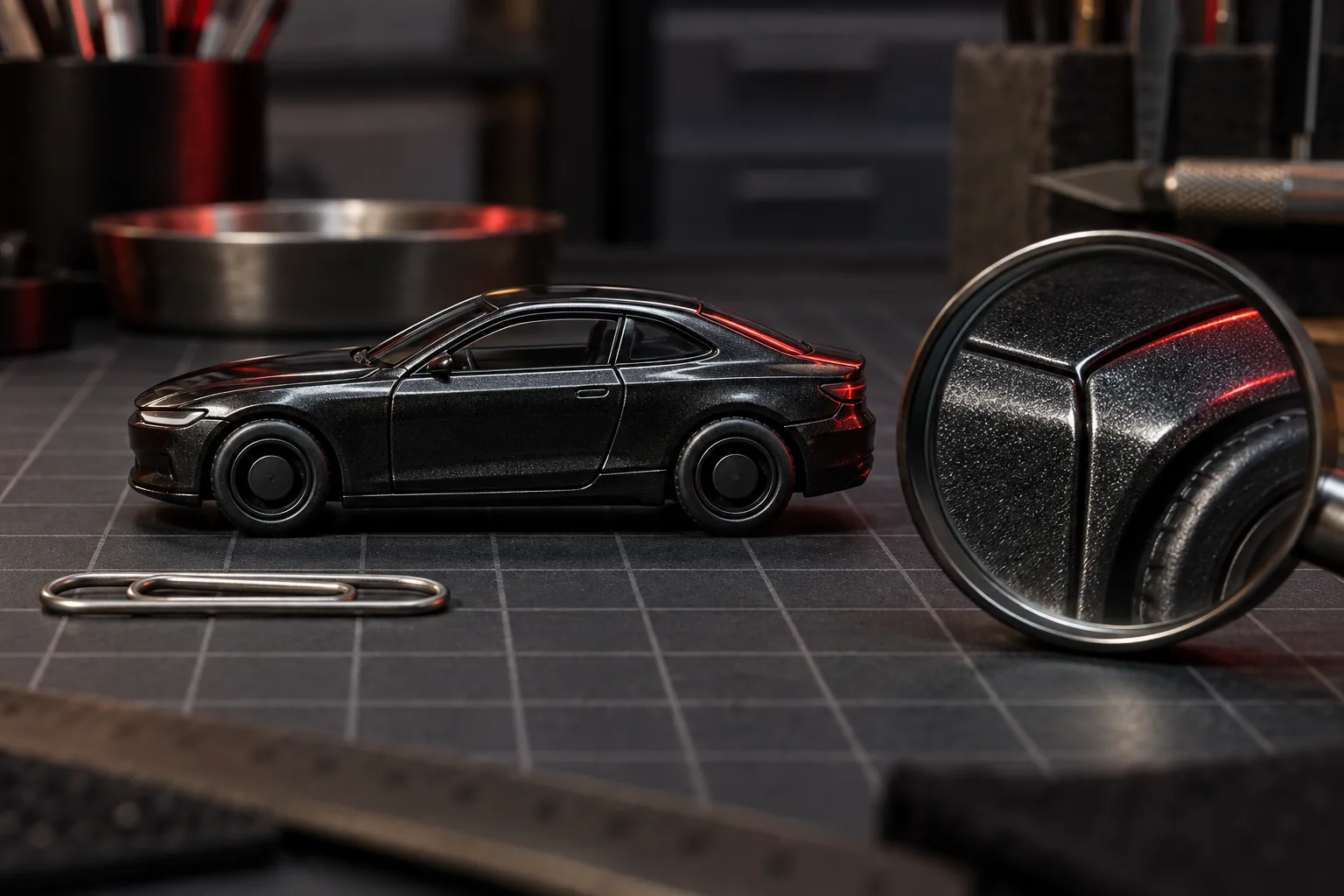
Inspect color coverage, edges, tampo alignment and the relationship between painted and unpainted parts. A tiny irregularity may be normal for a mass-produced toy; note it without exaggerating it.
Wheel diameter, tire thickness, axle width and ride height strongly affect character. Roll the model on a flat surface and check for rubbing or a lifted wheel.
5. Test movement and check scale
Open doors, suspensions or other features gently and only as intended. Look for useful travel, alignment and whether the feature compromises the closed appearance.
If scale matters, measure the model and compare it with verified real-vehicle dimensions. Do not infer exact scale from package size alone.
6. Turn it over
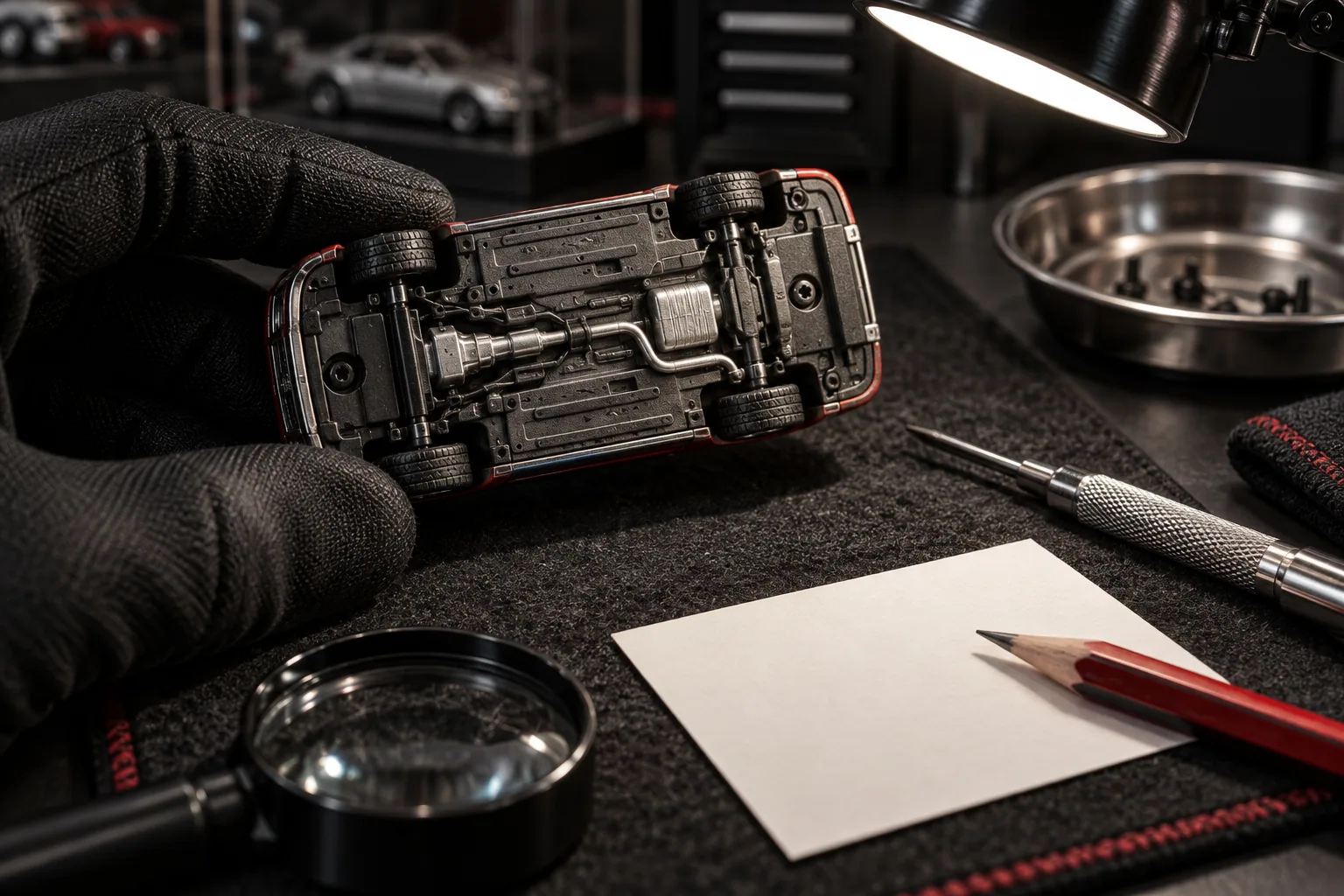
The base may identify the model, manufacturing region, material split, axle construction and copyright information. It also shows how the body and chassis are joined.
7. Make a short observation record
- Photograph front, side, rear and underside in consistent light.
- Write one strength, one concern and one distinctive design choice.
- Record package markings separately from your own observation.
- If comparing two releases, keep angle and distance as similar as possible.
Frequently asked questions
Do I need a macro lens?
No. A phone, steady support, clean lens and soft light are enough to begin. Macro equipment is helpful only after the basic setup is consistent.
How can I compare two models fairly?
Use the same background, light, camera height and viewing angles. Also account for price, intended audience and product purpose.
Should a paint flaw ruin the score?
Not automatically. Record how visible and repeatable it is, then separate quality control from the underlying design.
Sources and editorial policy
Reference links are listed below with the date used for this article. Linked pages may later change or move.
- Takara Tomy — Tomica 55th anniversary announcement (Japanese) (checked: 2026.09.14)
- Mattel — About the Hot Wheels Brand History and Future (checked: 2026.09.14)
- TOMYTEC — tomica LIMITED VINTAGE TLV (checked: 2026.09.14)
Factual claims are checked against the sources listed above. We do not invent hands-on impressions of products we do not own. This independent publication is not affiliated with any manufacturer.