GARAGE NOTE
Seven Things You Can Learn from Diecast Packaging
A 30-second pre-opening check can preserve the series, item number, scale claim, materials, rights information, production clues and card-art context.
QUICK ANSWER
Packaging is more than something to keep or discard. Photograph both sides before opening and record the product name, series, item number, scale statement, materials, rights line and production clues. One important caution: a copyright or tooling year is not automatically the retail release year.
- Record product and series names separately.
- Do not assume exact 1/64 scale when no scale is stated.
- Age and material markings offer clues about intended use and care.
- Copyright, tooling, production and release dates may differ.
- Clear front-and-back photos preserve information even if the package is discarded.
1. Separate the vehicle, series and item number
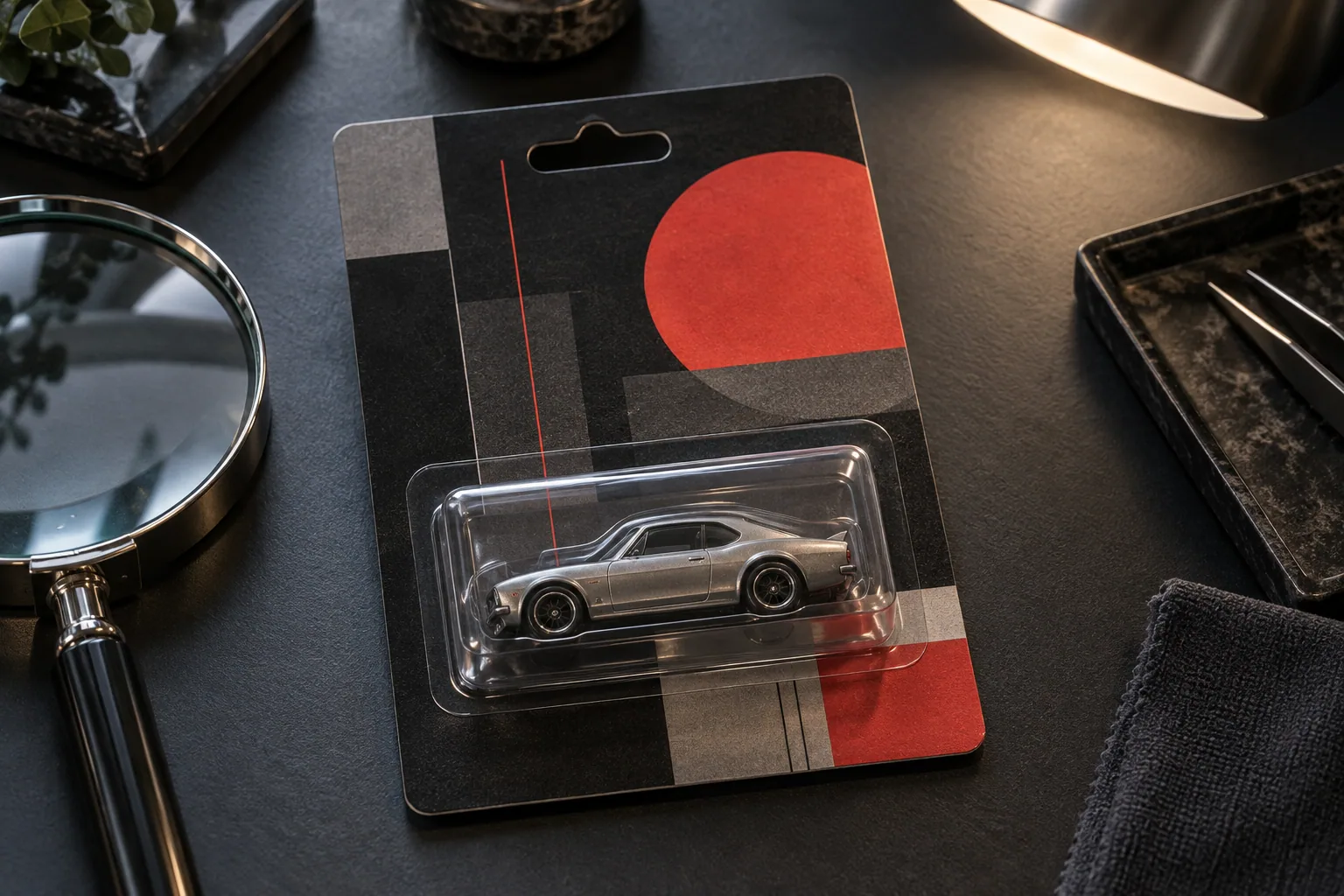
Treat the large vehicle name, series or theme, assortment number and product code as separate fields. This makes color and year variations easier to distinguish later.
The front may not tell the full story. Small markings on the back and the model base can help identify one release precisely.
2. Separate a scale claim from a size category
A printed 1/64 or 1:64 is useful evidence. Without it, do not call every three-inch diecast car mathematically exact 1/64.
For dioramas or strict comparisons, measure the model and compare it with verified dimensions of the real vehicle.
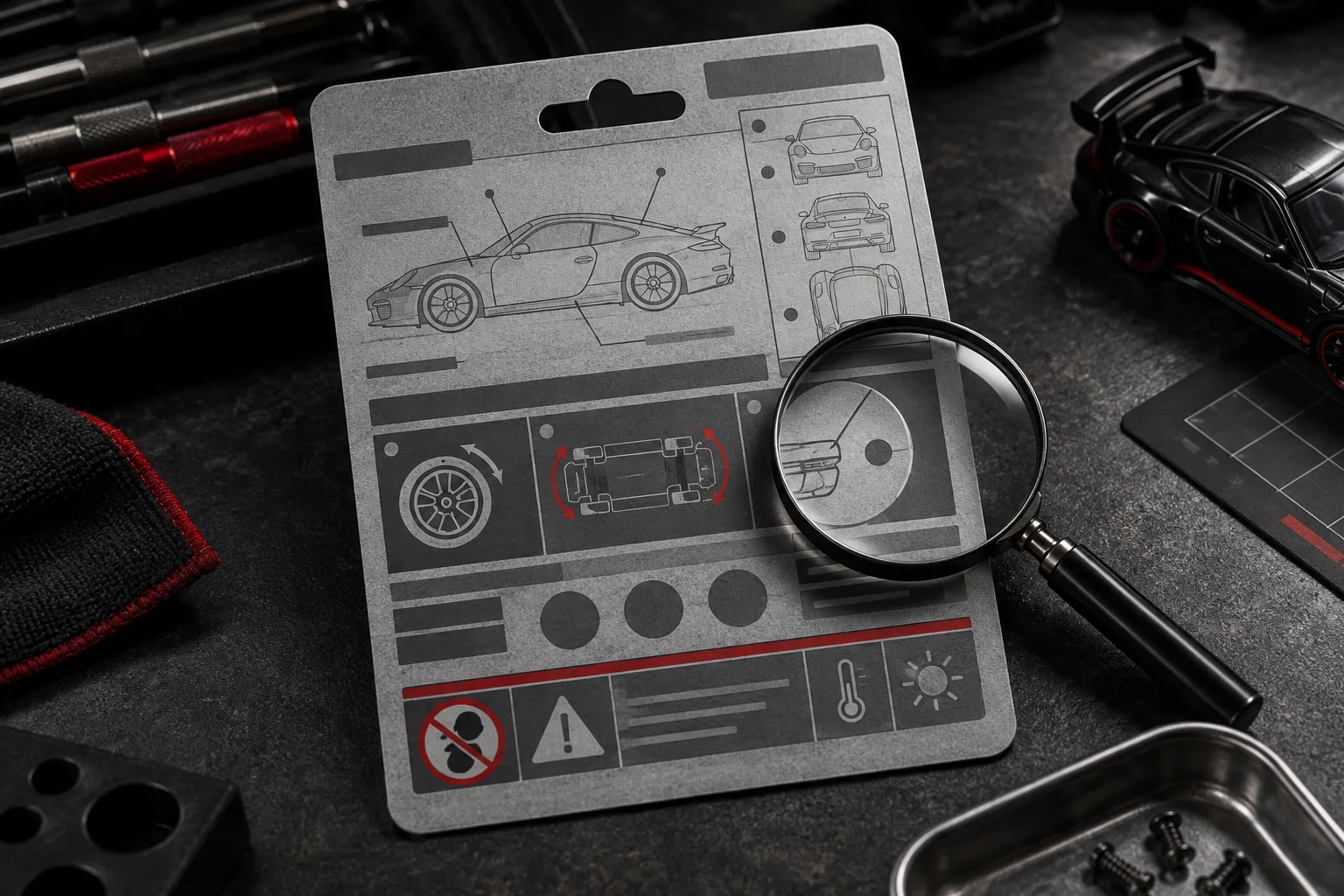
3. Read materials, age guidance and warnings
Material markings can suggest how body, chassis, windows and tires are constructed. Age guidance and warnings provide context about small parts and intended play.
Requirements vary by country, manufacturer and period. Check official guidance rather than guessing the meaning of an unfamiliar symbol.
4–6. Distinguish rights, dates and production clues
Rights lines may identify a real-car manufacturer or entertainment property even when a different company made and sold the miniature.
A year beside a copyright, trademark or tooling notice may not be the year that specific release reached shops. Verify a release date through official product pages, catalogs or announcements.
Manufacturing country, lot marks and product codes can help trace variations, but code systems differ. Start comparisons within the same series.
7. Read card art as launch context
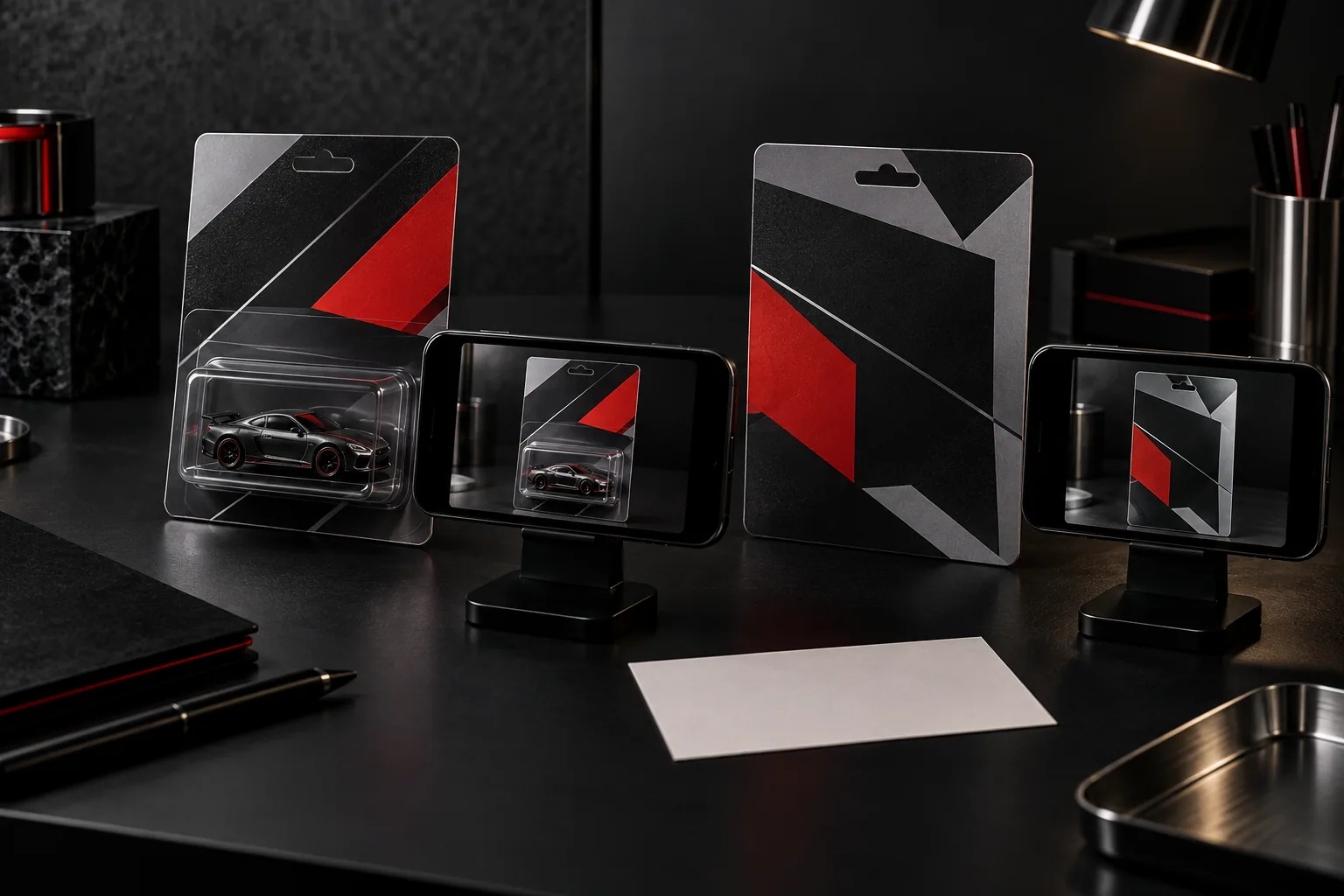
Background art, series colors, companion vehicles and campaign graphics show how the release was positioned. Packaging can be a design record even when the car is opened.
A 30-second record before opening
- Photograph the complete front without glare.
- Photograph the complete back.
- Add a close view of the item-code area when useful.
- Record purchase date and place.
- Only enter a release year when a reliable source confirms it.
NOTE — Keeping every package is optional. Photography can preserve information while reducing storage.
Frequently asked questions
Is the year on the package the release year?
Not necessarily. It may refer to copyright, a trademark or tooling. Confirm release timing through official listings, catalogs or announcements.
Is an unmarked three-inch car exactly 1/64?
You cannot assume so. Treat it as part of the small diecast category until dimensions or an official scale statement confirm the ratio.
What should I save before discarding packaging?
Clear front-and-back photographs plus purchase date, retailer and price create a useful minimum record.
About this note
This practical note is built around a repeatable observation or collection workflow and does not depend on a current product announcement. Any future addition involving release dates, specifications or news will identify its supporting source.
The procedure is presented as practical guidance, not as a universal product specification. We do not invent hands-on impressions of products we have not examined.