DIECAST HISTORY
A Brief History of Diecast Cars: From Metal Toys to 1/64
How Dinky Toys, Matchbox, Hot Wheels, Tomica and collector-focused models shaped today’s small-scale diecast culture.
QUICK ANSWER
Today’s 1/64 culture was not invented by one company. It grew from pre-war diecasting, compact post-war toys, the speed and fantasy of Hot Wheels, Tomica’s focus on familiar Japanese vehicles, and a later adult market for detailed scale models.
- Diecast vehicle toys became established in the 1930s.
- Matchbox helped normalize small, portable and serial collecting.
- Hot Wheels added speed, customization and fantasy to the category.
- Tomica brought familiar Japanese road vehicles to a palm-sized format in 1970.
- Modern 1/64 collecting combines play, display, photography and research.
Seven milestones at a glance
| Year | Milestone | What it added |
|---|---|---|
| 1934 | The Dinky Toys name appears | Mass-produced metal vehicle models |
| 1946 | Post-war Dinky production resumes | Durability, detail and moving features |
| Early 1950s | Matchbox small vehicles emerge | A portable, expandable collection |
| 1956 | Corgi Toys launches | Closer ties between vehicles and screen culture |
| 1968 | Hot Wheels launches | Speed, customization and bold design |
| 1970 | Tomica launches in Japan | Familiar domestic vehicles in a small format |
| 2004 | Tomica Limited Vintage launches | A consistent 1/64 scale for adult collectors |
NOTE — Dates summarize cited manufacturer and museum sources. Some origin stories differ slightly by source.
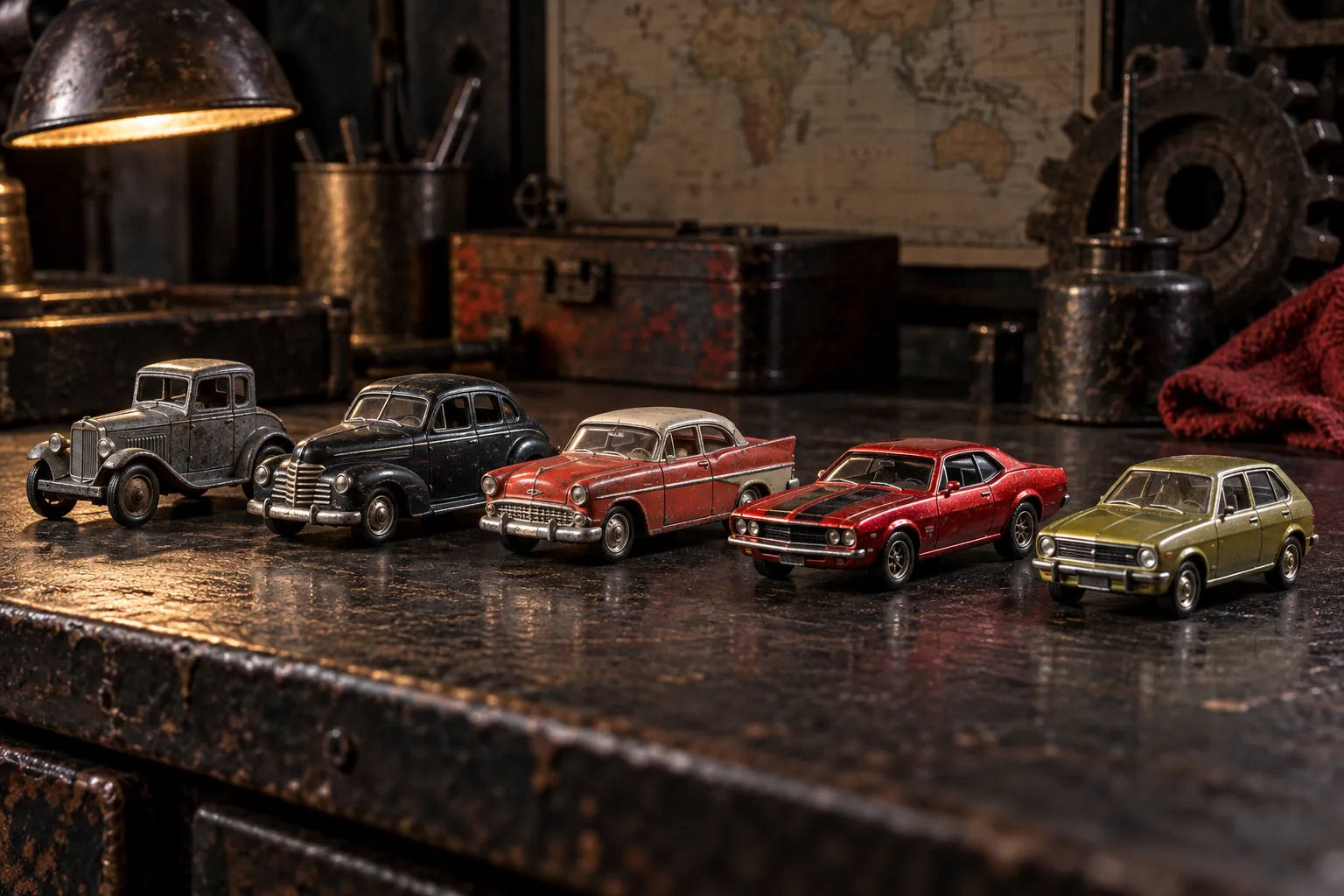
1930s–1950s: the diecast foundation
Dinky Toys helped establish the idea that real vehicles could be collected as sturdy, mass-produced metal miniatures. The Victoria and Albert Museum records the Dinky Toys name from 1934 and the resumption of production in 1946 after the Second World War.[1][2]
These models were not merely reduced cars. Material weight, moving parts and the range of civilian, military and working vehicles made the miniature world feel complete.
The 1950s: small enough to carry and collect
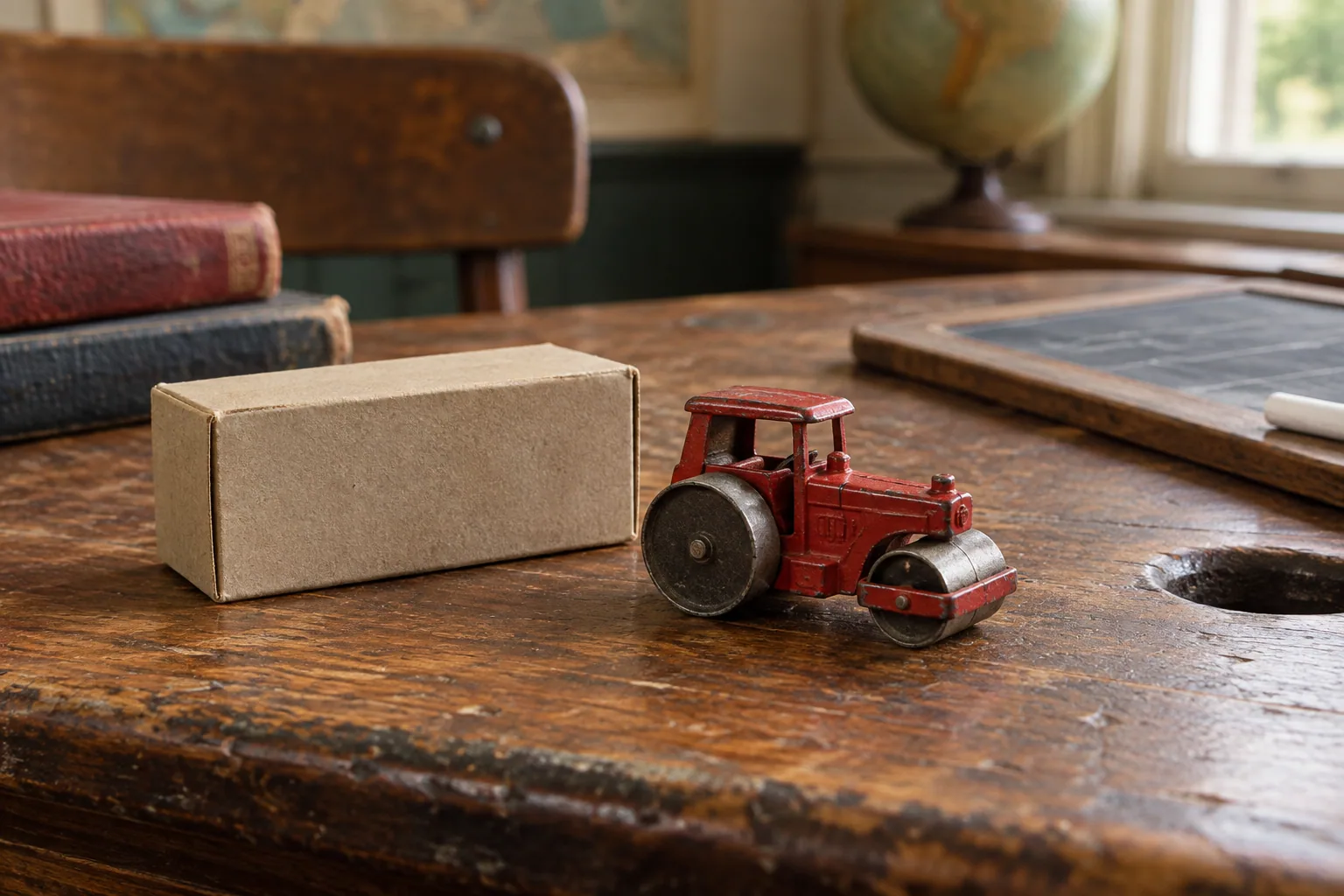
The familiar Matchbox origin story describes Jack Odell making a tiny road roller that could fit inside a matchbox for his daughter. The Strong National Museum of Play notes that Lesney expanded the small vehicle line in the early 1950s and was exporting tens of millions by 1960.[3]
The important innovation was a repeatable collecting format: one small vehicle, one compact package, a broad numbered range and an affordable path to adding the next model.
1968–1970: speed in America, familiarity in Japan
Mattel introduced Hot Wheels in 1968 with an emphasis on looking cooler and running better than existing toy cars. Fast wheels, bright finishes and customized proportions created a new measure of appeal beyond strict realism.[4]
Tomica followed in August 1970 with six models. Takara Tomy describes it as Japan’s first palm-sized diecast series centered on domestic vehicles, created when imported miniatures dominated the market.[5]
From the 2000s: a compact adult collecting format
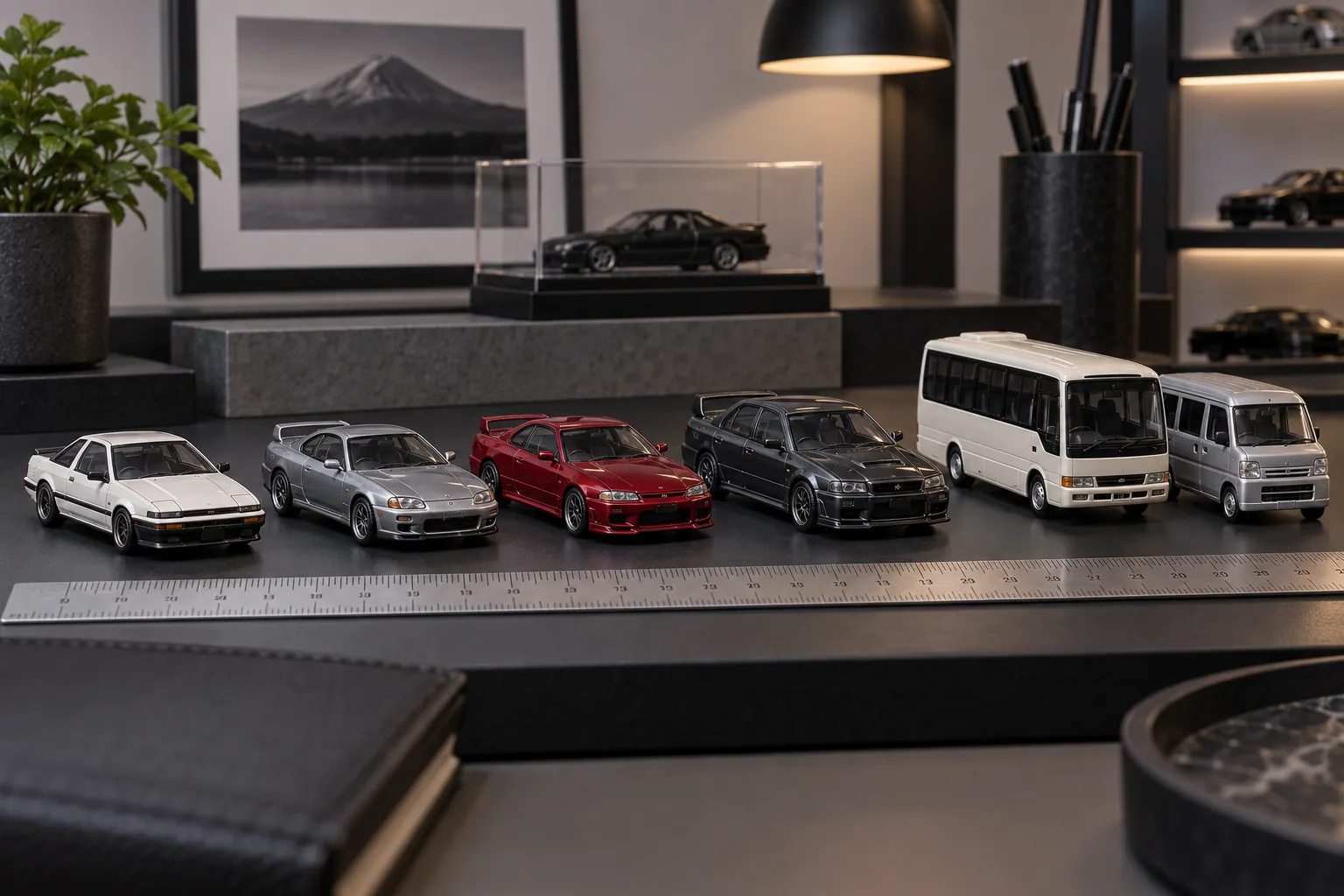
Tomica Limited Vintage began in 2004 and uses a consistent 1/64 scale, allowing the real size difference between cars, buses and trucks to remain visible on a desk.[6]
Across the market, more detailed castings, diorama accessories and display products turned the small format into a space for close observation, photography and historical curation.
Why the format endures
Small-scale diecast fits the hand, desk and shelf while still preserving enough information to compare shapes, eras and design decisions.
Not every palm-sized model is a mathematically exact 1/64. That flexibility is part of the history: some products prioritize consistent packaging and play, while others prioritize scale fidelity.
Frequently asked questions
Who made the first 1/64 diecast car?
There is no simple single-company answer. Early small diecast vehicles did not always use a strict common scale, and 1/64 also has roots in model-railway scale systems.
Are all Tomica models 1/64?
No. Standard Tomica models use several scales to fit a common palm-sized format. Tomica Limited Vintage is designed around a consistent 1/64 scale.
Why are old diecast cars still interesting?
They record the technology, design language and everyday vehicles of their period. Their value is historical and tactile, not only monetary.
Sources and editorial policy
Reference links are listed below with the date used for this article. Linked pages may later change or move.
- Victoria and Albert Museum — Must-have Toys (checked: 2026.09.14)
- Victoria and Albert Museum — The most popular toys ever – a decade-by-decade guide (checked: 2026.09.14)
- The Strong National Museum of Play — Matchbox Cars (checked: 2026.09.14)
- Mattel — About the Hot Wheels Brand History and Future (checked: 2026.09.14)
- Takara Tomy — Tomica 55th anniversary announcement (Japanese) (checked: 2026.09.14)
- TOMYTEC — tomica LIMITED VINTAGE TLV (checked: 2026.09.14)
Factual claims are checked against the sources listed above. We do not invent hands-on impressions of products we do not own. This independent publication is not affiliated with any manufacturer.